

What Is Travel with Meaning? The Example of a Stay in Guanacaste, Costa Rica
By Dario Mangano
There is a way of traveling that has nothing to do with ticking off monuments or consuming a backdrop: immersion, real encounters with local communities, time to understand a place. That is the spirit of our Travel with Meaning journeys.
To make the idea concrete, here is one of these journeys: four days in Guanacaste, Costa Rica, staying with host families alongside the Guanacaste Water Center, a local organization that helps a thirsty landscape hold rain again.
A Landscape That Stopped Drinking the Rain
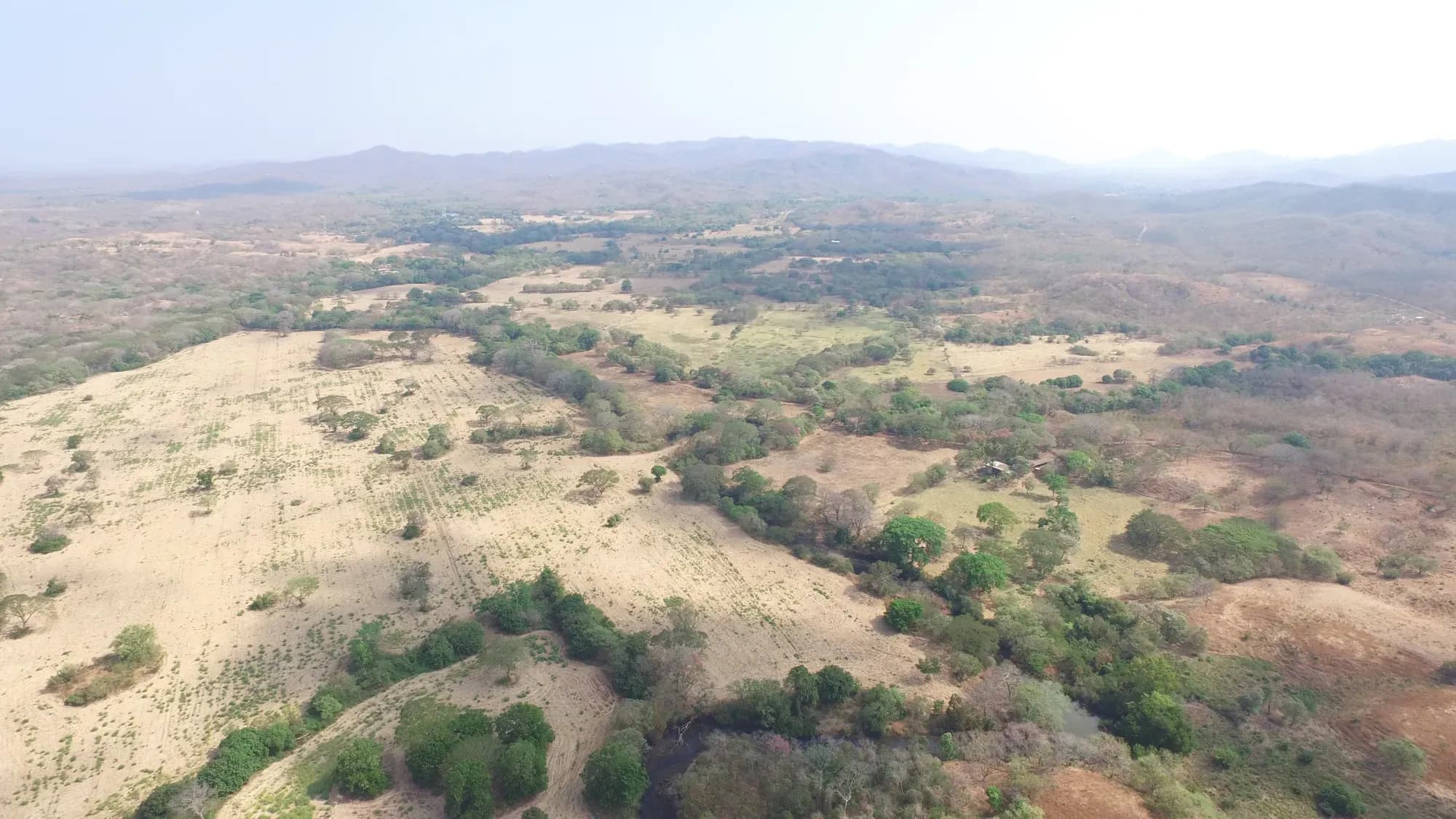
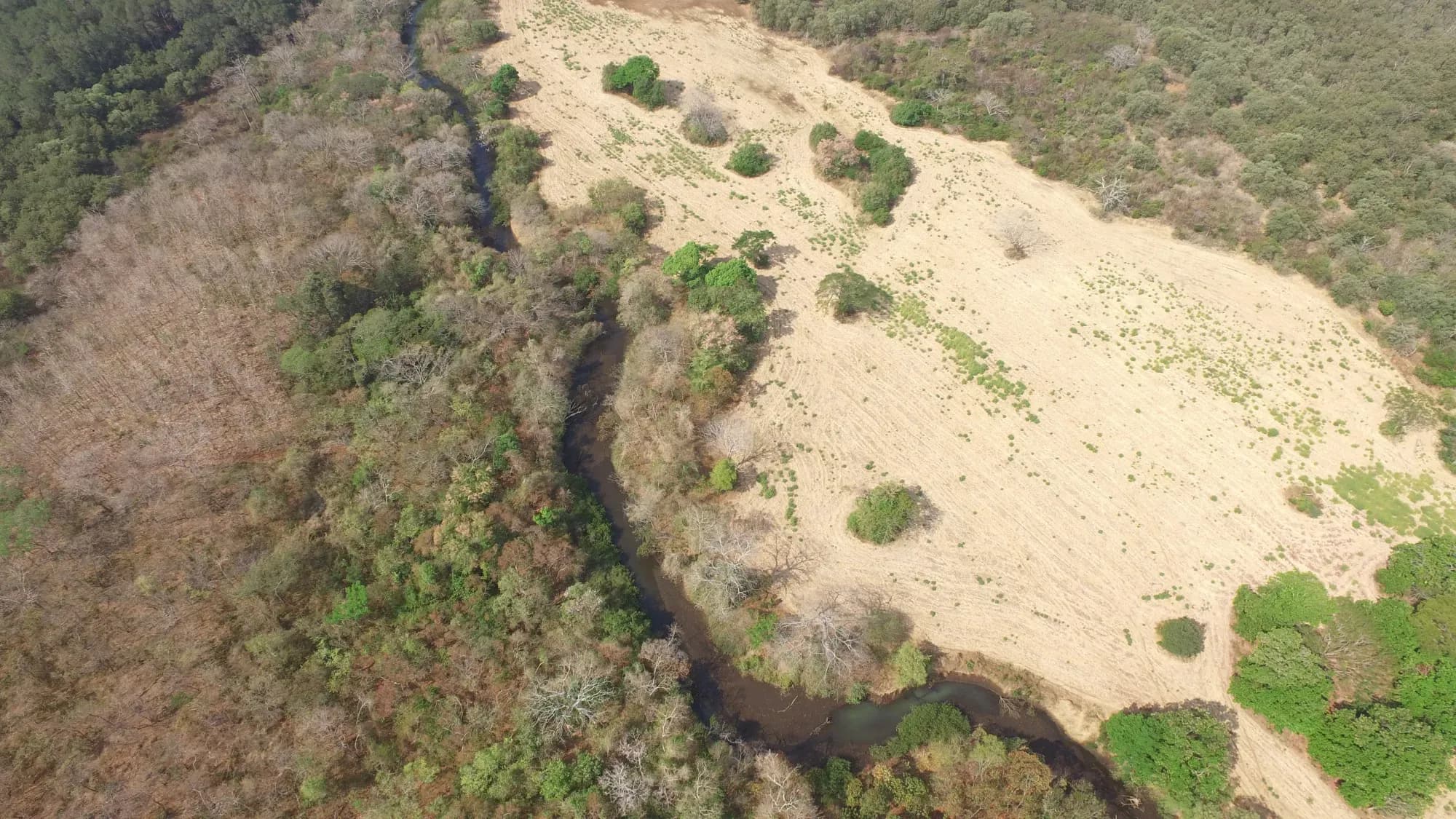
The Nandamojo watershed covers nearly 11,700 hectares (about 29,000 acres), from the community of 27 de Abril to Junquillal beach. The dry season lasts about six months, starting in November, and the rains begin in May.
In the 1950s and 1960s, the forests were cleared by fire to make room for cattle. Without trees and native grasses, the land eroded, fertile valleys were covered by a layer of silt that water can no longer pass through, marshes and estuaries filled in, and the water table dropped. The Nandamojo River ended up drying out for part of the year. Even today, fire and herbicides remain the most common maintenance tools, and the Santa Cruz area records the highest number of wildfires in the country.
The result: soil that rejects water instead of absorbing it. Aquifers recharge less, and in the driest years some communities are left without drinking water. Climate change is making droughts more frequent and more severe.
Restoring the watershed, tree by tree and trail by trail, is one of the few actions that works at the scale of an entire community. The goal of this trip is not to visit the problem, but to spend a few days doing the physical work that lets the landscape become a sponge again.
A Local Partner Committed for Fifteen Years
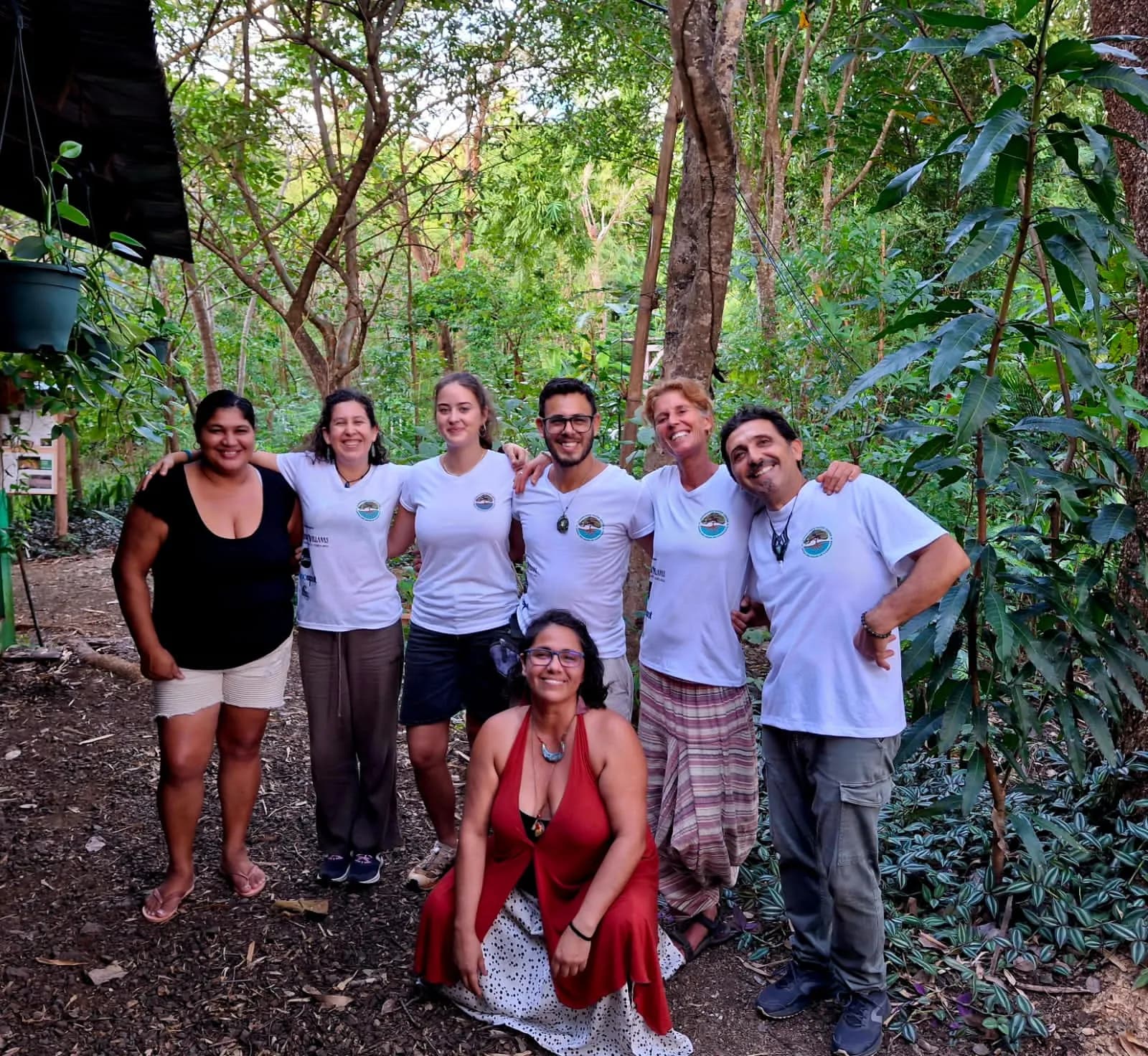
The Guanacaste Water Center is a community center for water and resource conservation education, located in Paraíso, in the Santa Cruz area. Run by the Asociación Nandamojo, a non-profit, it has worked with local communities for fifteen years on ecosystem restoration, environmental education and protecting the watershed along the Nandamojo River.
Its 75-hectare nature reserve is home to a reforestation nursery and a network of trails. The team, whose executive director personally oversees the work of every group, relies on Costa Rican guides and local labor for each activity offered to travelers.
The center also acts well beyond its walls: helping valley families improve soil fertility and rainwater absorption, supporting local wildfire brigades, and networking with community groups and institutions. The Nandamojo River is one of 26 Costa Rican watersheds awarded the Bandera Azul Ecológica label in 2014.
Among its initiatives, Bees for Trees is a small local business born from beekeeping families: they earn an income from honey and, in exchange, reforest 10% of their land. The honey is sold at the center and in shops and cafés in several towns across the country.
The organization runs on a mix of grants, donations and practical support like that of this trip: volunteer work, income for host families, and a contribution that funds the time of a team member to prepare and supervise each group's work.
A Living Laboratory, for All Ages
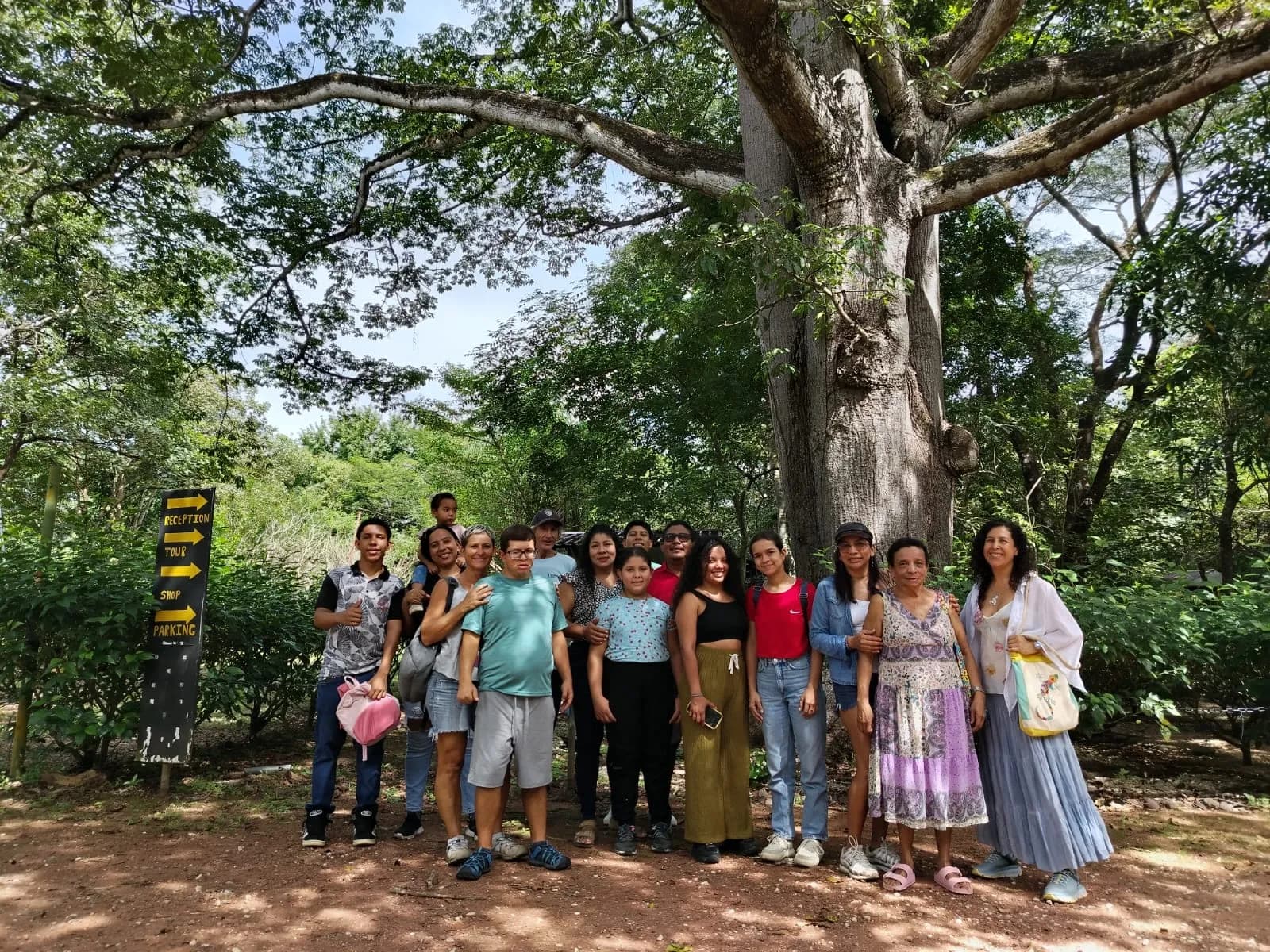
Before planting anything, you learn. The center works as a living laboratory: models, experiments and learning stations under an open pavilion, among the plants. The visit lets you choose three topics out of seven: climate change, watersheds and water, waste management, wildfires, tropical dry forest wildlife (including the snakes of Guanacaste), tropical dry forest, and erosion control. It also includes a snack, a nature reconnection activity, a honey tasting and an optional walk.
The center also offers workshops in Spanish and English, science activities for families and schools, school field trips, a nursery of native trees and plants, and consulting in ecological restoration and landscaping. You can also get involved as a volunteer, for a day, a few weeks or a few months.
This is the same spirit that guides the stay: understand first, act second, in the company of people of all ages.
Four Days to Take Part, Not Just Watch
Groups of five to fifteen travelers take part in three work sessions on the Water Center's ongoing projects, and each afternoon discover a different side of Guanacaste's story.
· Day 0 (optional): arrival the evening before. Settling in with host families and meeting the community over a football match, so the trip starts with you already feeling at home rather than jet-lagged.
· Day 1, understanding the challenge. A morning discussion on Guanacaste's water crisis, then the first work session: reforestation nursery or maintenance of the trails of the 75-hectare reserve, depending on the season. In the afternoon, kayaking in the estuary or a guided hike through the watershed's recharge zones.
· Day 2, exploring the ecosystem. A second work session in the morning, then an afternoon at a local sea turtle hatchery and on the beach.
· Day 3, working with the community. A final session alongside local volunteers on a shared watershed project, or an environmental education workshop. In the evening, a celebration with the host families and neighbors, perhaps around a fire in the reserve or under the stars on the beach.
· Day 4, sharing and heading home. A morning of reflection to talk about what the group saw and learned, with an optional boat ride through the Palo Verde wetlands before the return.
What You Actually Do in the Field
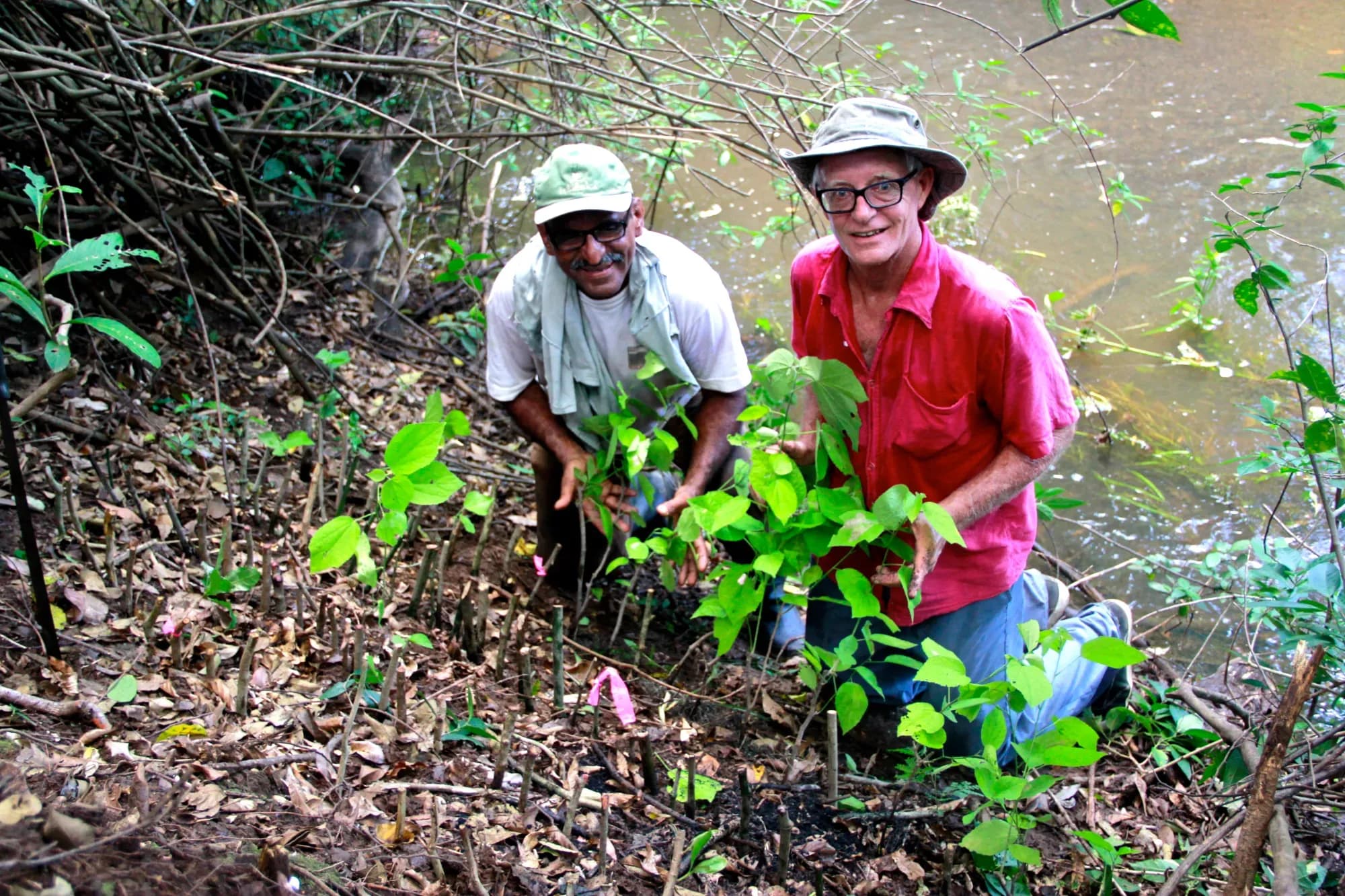
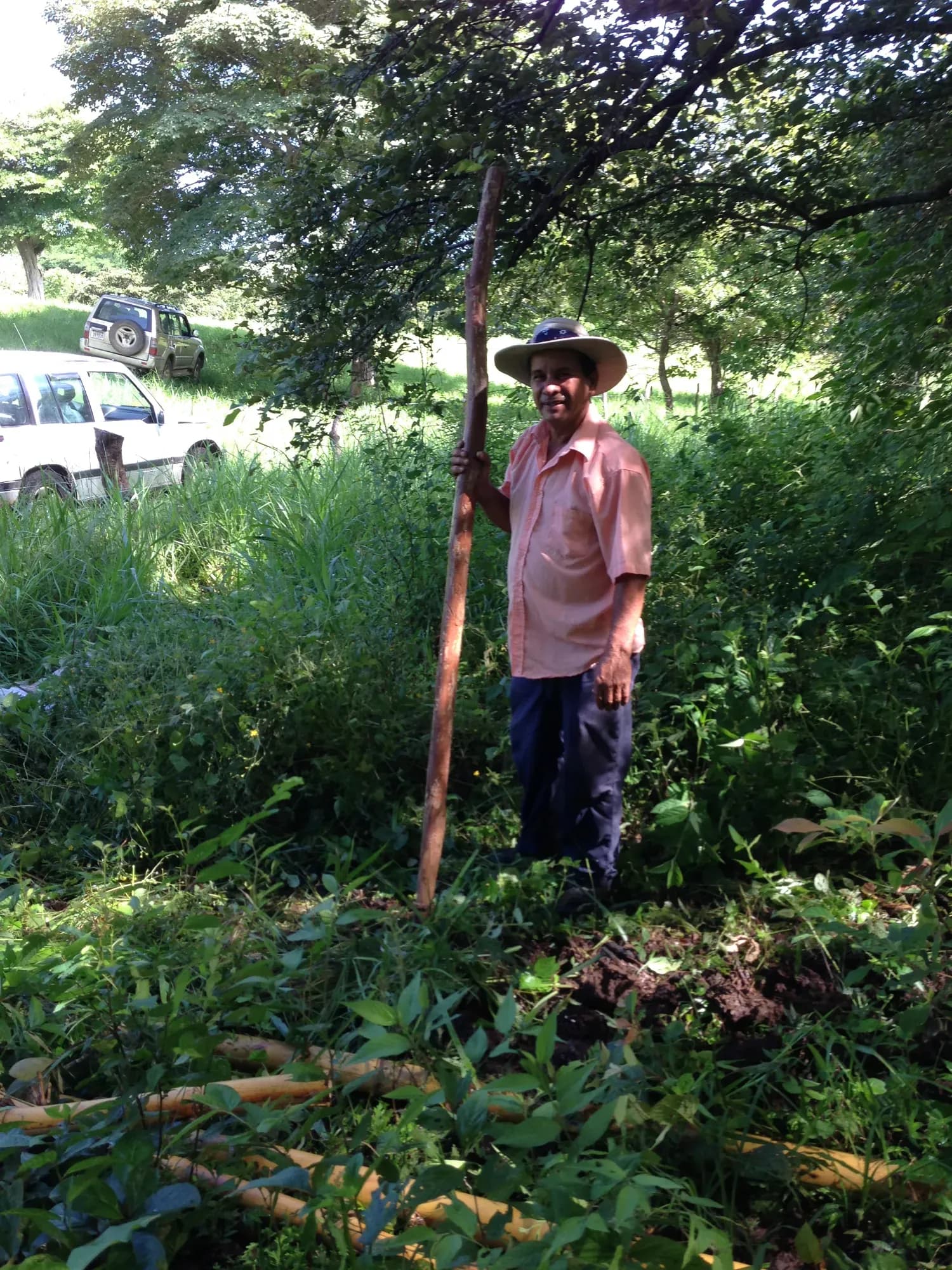
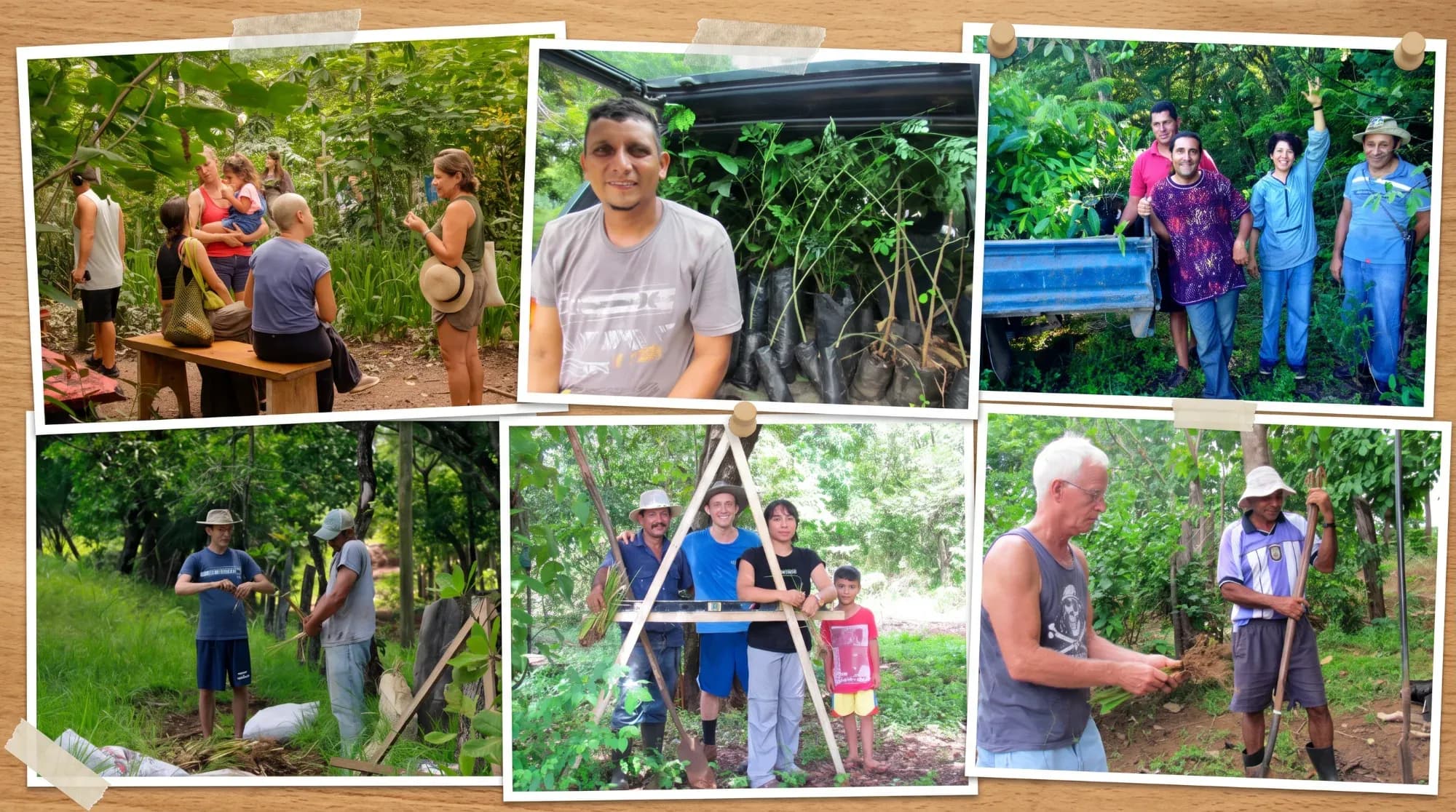
During the three work sessions, you plant trees, maintain trails and feed the nursery. One of the most common tasks is planting vetiver, a deep-rooted grass that holds the soil, helps capture rainwater, restores fertility and stores carbon. The rows follow the contour lines, marked out with a simple wooden A-frame level, and then the riverbanks are reforested with native species.
The photos below come from field work carried out with the valley's communities over the years: hands in red earth, seedlings in bags, simple tools and plenty of people sharing the effort.
Extend Your Trip: Ten Days Across Costa Rica
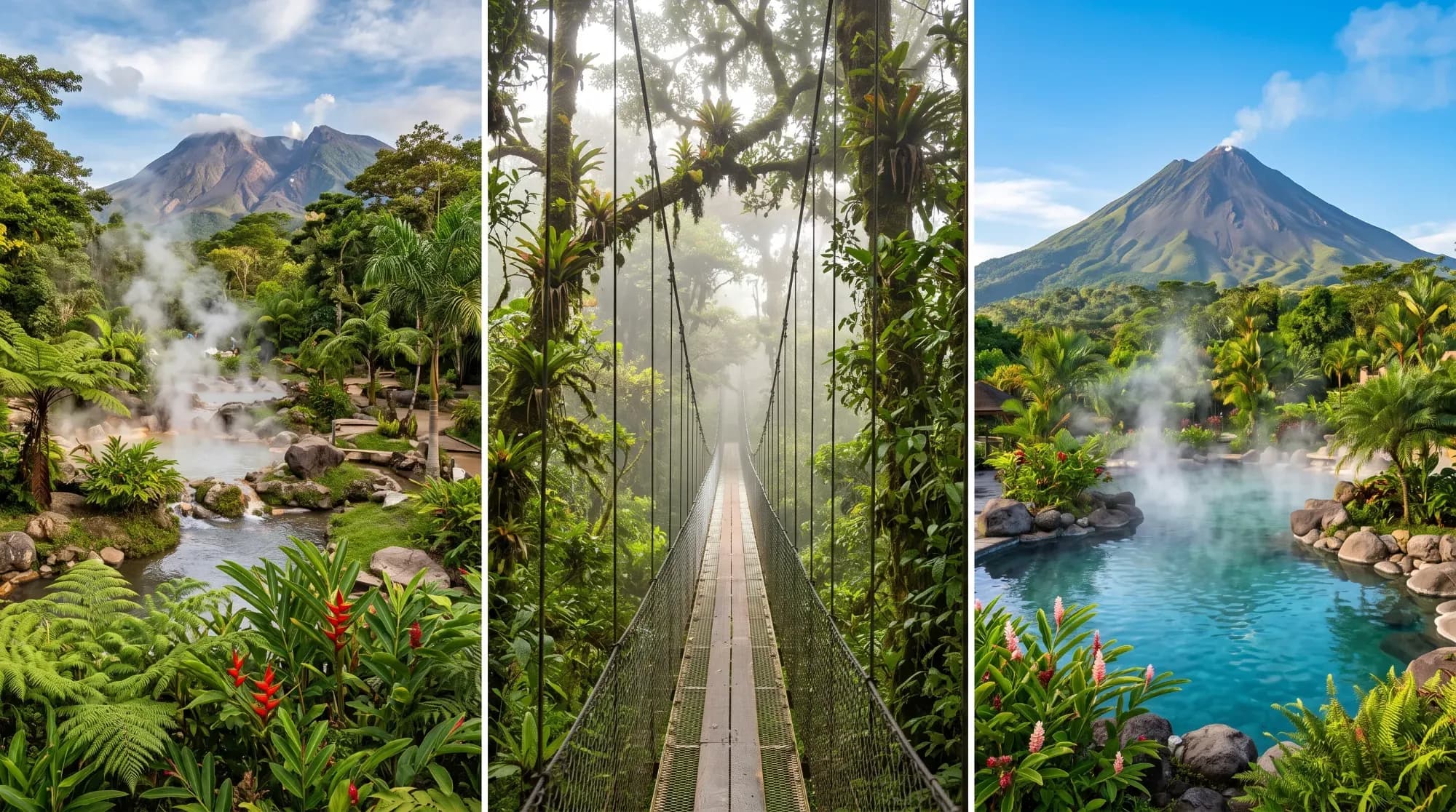
For those who want to go further, the Guanacaste stay opens onto a six-day loop through volcanoes and cloud forest, with no backtracking since it ends near Liberia.
Each stage favors small local lodgings and guides certified by the Costa Rican sustainability program (CST) over international chains, keeps a respectful distance from wildlife, and goes by road rather than domestic flights.
· Day 5, Rincón de la Vieja. About an hour by road, at the foot of the volcano. An afternoon in family-run hot springs fed by the volcano's geothermal water, with no pumps and no hotel complex.
· Day 6, volcanic trails. A guided hike in Rincón de la Vieja National Park, where the dry forest gives way to cloud forest, near fumaroles and waterfalls. Night in a small eco-lodge on a working reforestation ranch.
· Day 7, toward the cloud forest. Transfer by road (about four hours, via Tilarán) to Monteverde; the same route avoids going back through San José. Evening at a family-run lodge.
· Day 8, Monteverde. A dawn walk with a certified local naturalist in a community-managed reserve whose entrance fees fund forest conservation: quetzals, orchids, the cloud forest at its quietest hour. In the afternoon, a visit to a small coffee or cocoa farm, to directly support the family that grows it.
· Day 9, Arenal. Drive to La Fortuna (about three hours), at the foot of Arenal volcano. In the evening, a soak in a community-owned hot spring rather than the large hotel circuits.
· Day 10, wildlife, then departure. Guided birdwatching early in the morning near Arenal, then a transfer to Liberia airport (about three hours): the loop closes without crossing the country again.
What This Trip Changes
· For travelers: a real understanding of a global environmental issue, built through an authentic relationship with a host family rather than a staged version of Costa Rican culture.
· For the community: host families are paid a fair rate for meals and lodging, local guides and businesses are employed throughout the stay, and the trip's funds directly support the Water Center's work.
· For the watershed: three sessions of real, needed work, trees planted, trails maintained, the nursery fed, whose effects continue long after the group leaves.
Support the Center's Work, Even Without Traveling
If you can't go but this story speaks to you, there are other ways to help. You can visit the center (Monday to Saturday, 8 a.m. to 4 p.m., 1 km east of the Paraíso sports square), get involved as a volunteer, buy Bees for Trees honey or make a donation. According to the center's website at the time of writing, a donation of 20 dollars funds the planting of 100 vetiver plants.
The Center's YouTube Channel
Good to Know
· Group size: 5 to 15 travelers
· Length: 4 days, 3 nights (5 days with early arrival)
· Where you stay: with local host families
· Pricing: on request, quoted per group
Field work varies with the season and the Water Center's ongoing projects. Sunshine Adventures can adapt the dates, group size and itinerary around the stay, including the continuation of the trip elsewhere in Costa Rica.
Travel to Understand, and Leave a Useful Mark
A journey with meaning does not try to turn the traveler into a spectator. It gives them a real role, alongside those who know the territory, and it leaves something useful behind.
This trip is designed with the Guanacaste Water Center and local host families. Write to us and we will help you plan the dates, the group size and everything around the stay.